US Patent Filing for Foreign Inventors and International Companies
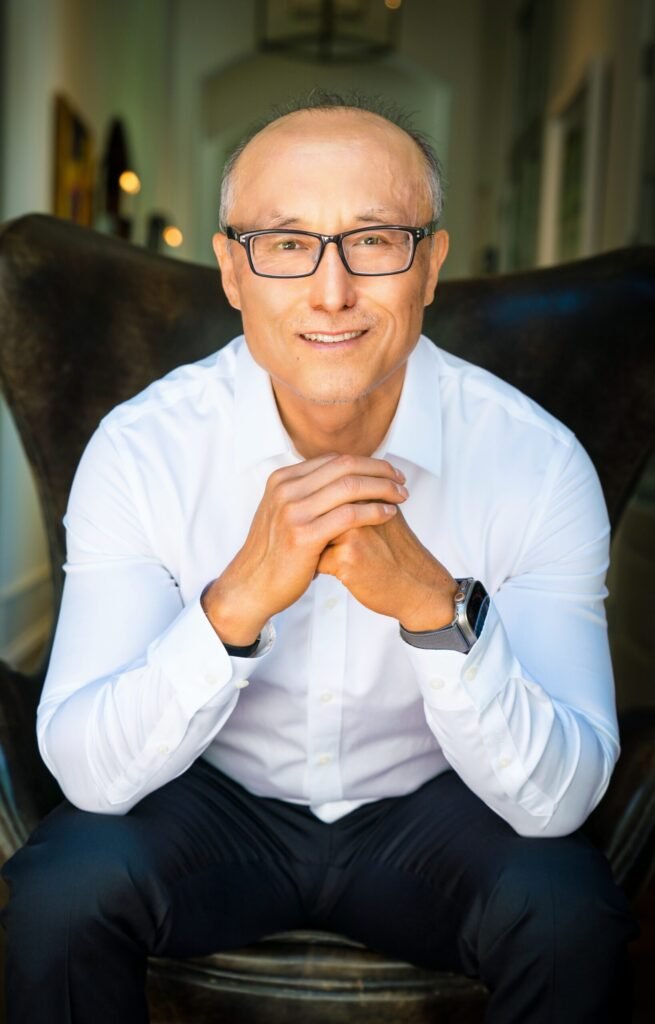
I’m Sung Oh, a USPTO-Registered Patent Agent (Reg. No. 45,583). A large share of my clients are inventors and companies outside the United States — Canada, Germany, Italy, Bulgaria, Egypt, Saudi Arabia, the UAE, Vietnam, Hong Kong, Australia, and beyond — filing US patent applications to protect their inventions in the American market. You work directly with me by email, and I file with the USPTO on your behalf.
- No US travel or US company required
- Flat fees from $575 (provisional) and $875 (non-provisional), plus the government fee — fixed before work starts
- Provisional government fee as low as $65
New USPTO rule: foreign inventors must now use a registered practitioner
As of July 20, 2026, the USPTO requires applicants and patent owners whose domicile is outside the United States or its territories to be represented by a USPTO-registered patent practitioner. The rule applies to papers submitted on or after that date, regardless of when the application was filed.
In practice, amendments, replies, and examiner interviews must involve a registered practitioner. A reply that is not properly signed will not be entered.
Foreign companies have needed a registered practitioner since 2012. What changed on July 20 is that individual foreign inventors are now covered as well.
Provisional applications are not exempt, though the practical effect is smaller, since a provisional is not examined. A registered practitioner is required for any paper in a provisional that needs processing, such as a petition.
I am a USPTO-Registered Patent Agent, Reg. No. 45,583 — verifiable on the USPTO’s public practitioner roster. That is the credential the rule requires.
How I can help
Already wrote your application, or used AI to draft it? I review it and file it as your registered practitioner, from $575 for a provisional or $875 for a non-provisional. I read every application before I file it. If the claims need work, I will show you where and why, and quote it before doing anything. Nothing changes without your agreement.
Already filed and now need a registered practitioner? I can become your practitioner of record with a power of attorney, for a flat fee of $375, and sign the papers the USPTO now requires a practitioner to sign.
Have a UK, European or home-country application? I convert it to US format and file it, from $1,000. If you missed the 12-month priority deadline, the priority can often still be restored within 14 months.
Why foreign inventors should file in the US first
For AI, software, and technology inventions, the market that matters is the United States. That is where the investment happens, where the licensing deals are signed, and where infringement is litigated. There is no world patent — patents are territorial, granted country by country — so if you protect your invention in only one country, that country should be the US.
With one caveat I’ll come to at the end, I generally advise foreign inventors to file in the United States first. Three reasons.
1. The US provisional application:
The United States offers something almost no other country has. A provisional application is never examined and does not become a patent on its own, but it locks in your priority date for a government fee as low as $65, and gives you twelve months of “Patent Pending” status. It is also much faster to prepare than a full application, so you can secure your date while you continue to develop the invention, test the market, or raise money. Within those twelve months you file the non-provisional — the application that is actually examined and can issue as a patent.
2. The cost is lower, and you pay it in stages:
A US provisional starts at $575 to review and file an application you wrote, or $1,500 if I draft it. Compare that to a German national filing at roughly €390 in official fees plus about €5,000 in drafting, or a European Patent Office filing at about €1,655 to file and roughly €6,000 to reach grant. Within twelve months you will need to file the US non-provisional, which starts at $875 to review and file, or $3,000 if I draft it. The US route also lets you spend it in two steps instead of one.
3. You can stop after the first step:
This is the real advantage. If during those twelve months you learn the invention isn’t worth pursuing — the market isn’t there, the prior art is against you, the funding doesn’t come — you can walk away having paid only for the provisional instead of the full amount. Filing in stages buys you the option to change your mind.
Important: before you file anywhere, check your home country’s rule. Some countries require their residents to file at home first, or to obtain a foreign filing license, before filing an application abroad. The rules vary widely — see the FAQ below for a country-by-country summary.
WIPO publishes the official country-by-country list.
I am licensed before the USPTO, not in foreign countries. Please confirm your home country’s rule with a local patent professional before filing.
Did you receive a Show Cause Order from the USPTO?
I represent applicants who have received a Show Cause Order, and I have prepared and filed responses to these orders for foreign inventors. If you have received one, the first thing to understand is what happens if you do nothing.
What these orders are. The USPTO is contacting applicants whose applications were filed from the Patent Center account of someone not registered to practice before the Office. Many are foreign inventors who hired a consultant online — often through Fiverr or a similar marketplace — to prepare and file. Since the start of fiscal year 2025 the USPTO has terminated more than 3,800 applications for rule violations, and in April 2026 a single final order terminated over 400 for unauthorized representation.
If you paid someone to prepare your application and that person was not a registered patent attorney or agent, your application may be in this group. The consultant may have described himself as an “IP expert” or “patent consultant.” That is not the same as a USPTO-registered practitioner, and many clients learn the difference only when the order arrives.
What the order demands. Five things: why the application was filed from that person’s account; who prepared the specification, claims and other legal work; any other evidence bearing on unauthorized representation; which signatures were personally inserted by the person named as signing them; and evidence that those signatures are authentic.
The last two decide the outcome. Under 37 CFR 1.4(d)(2)(i) an electronic signature must be personally inserted by the signer. Approving a draft by email and letting someone else type your name does not satisfy the rule, however clearly you authorized it. If you did not type your own signature, the right answer is to say so — and then cure it. A response that claims a signature you did not make is worse than no response.
Three requirements that void a response if missed. The period is two months from the mailing date and cannot be extended. No petition for extension of time is available under 37 CFR 1.136(a). The signature must be attested by a notary public or carry an apostille under 37 CFR 1.66 — for most foreign applicants that means a local notary plus an apostille under the Hague Convention, which takes time to obtain. And the response must be filed through Patent Center only; the USPTO has suspended mail, facsimile and hand delivery in these matters.
One more requirement applies since July 20, 2026: applicants domiciled outside the United States must be represented by a registered practitioner. A foreign applicant can no longer file the response alone.
The consequence most applicants do not know. If you do not respond, you do not simply lose the application. You lose the priority date with it.
In the leading decision in this line of cases, the sanctions under 37 CFR 11.18(c) included precluding any petition to revive, and precluding any later paper claiming benefit of the terminated application’s filing date. You cannot refile and keep your original date. Anything published in the meantime becomes prior art against you.
In that case the applicant never answered. The final order records it in one sentence: the USPTO did not receive a response.
There is no second round. One order, one response, one final decision. No reply brief, no hearing, no argument. Everything goes in a single filing.
What a real response looks like. It is not a letter. It is an evidence package. In the responses I have filed, each one included a sworn, notarized and apostilled statement from the applicant; every email with the consultant, reviewed end to end; the consultant’s own marketplace profile and messages; the USPTO payment receipt showing who actually filed; a ratification and confirmation of signatures under 37 CFR 1.4(h); substitute inventor declarations signed by the applicant personally; and an exhibit list of ten to fifteen documents. The USPTO’s first stated factor in setting a sanction is “any response received.” A full, honest response is the strongest thing you can put in front of the Office.
The rules also contain the cure. The orders state there is “reasonable doubt as to the authenticity of the signature.” That phrase comes from 37 CFR 1.4(h), which lets the Office require ratification, confirmation, or evidence of authenticity, and defines confirmation as submitting a duplicate document with a proper signature. Separately, 37 CFR 1.4(g) expressly contemplates an applicant who paid for help preparing an application, and provides disclosure as the remedy.
These are not clever arguments. They are the mechanisms the regulations name.
Two things I check that most applicants miss. First, whether the consultant also filed a micro entity certification without asking for your income. If your income was over the limit, that certification is wrong too, and it is better to find and fix it yourself than to have the Office find it. Second, whether the same consultant filed other applications for you that have not yet received an order. Those can be cured voluntarily now, before an order issues.
What I do. I am a registered patent agent, Reg. No. 45,583, and I represent foreign-domiciled applicants before the USPTO.
These orders are new. They started arriving in the summer of 2026, the same time the USPTO adopted its July 20, 2026 rule requiring foreign applicants to use a registered practitioner. Very few practitioners have handled one. I have — I prepared and filed responses for a foreign inventor’s applications, and from that work I know what the Office asks for, how it must be signed and notarized, and what evidence matters.
The process is complicated. The response I file is not. I have built a system for it: a question sheet you answer in your own words, a checklist of the documents to gather, and a fixed order for the notarization and apostille. You supply the facts and your signature. I do the rest.
My flat fee is $3,000 for the first response and $1,500 for each additional application in the same portfolio. The fee is fixed before work starts.
Frequently asked questions from foreign inventors
1. Do I need a US patent attorney or agent to file, or can I file myself?
As of July 20, 2026, the USPTO requires applicants and patent owners domiciled outside the United States to be represented by a registered patent practitioner. Foreign companies have needed one since 2012; the rule now extends to individual foreign inventors as well. I am a USPTO-Registered Patent Agent, Reg. No. 45,583.
2. Does your home country allow you to file your first patent application in the US?
Some countries require their residents to file at home first, or to obtain a foreign filing license, before filing an application abroad. The rules vary widely.
Countries with broad restrictions include China, France, India, Italy, and Spain. Countries with military or defense-only restrictions include the United Kingdom, Germany, Sweden, Norway, Israel, Japan, and South Korea. Many countries have no restriction at all — including Canada, the Netherlands, Switzerland, the UAE, Saudi Arabia, Mexico, and Brazil.
Italy is a common example: an Italian resident may file abroad if a national application was filed in Italy more than 60 days earlier and was not made subject to secrecy rules.
See WIPO’s official country-by-country list to check whether your country qualifies.
I am licensed before the USPTO, not in foreign countries. Please confirm your home country’s rule with a local patent professional before filing.
3. Do you use my invention materials to train AI models?
No. Your invention disclosures, drafts, and communications are confidential and are never used to train AI models. Where AI tools are used in drafting, they are used under settings that do not retain or train on your data, and every application is personally reviewed by a registered practitioner before filing.
4. Who actually reviews and files my application?
I do — Sung Oh, USPTO-Registered Patent Agent, Reg. No. 45,583, verifiable on the USPTO’s public practitioner roster. Every application is reviewed, refined, and filed by me personally. This is not an AI-only drafting service.
5. Will I receive the official USPTO filing receipt?
Yes. After filing you receive the official USPTO electronic filing receipt showing your application number and filing date. That is your proof of Patent Pending status.
6. How long does it take to prepare and file my application?
A provisional is usually filed within three days of payment if it needs no rewriting, or within 10 days if it does. For a non-provisional, I review it within about a week and file about a week after you approve. Your timeline is confirmed before work begins.
7. What payment methods do you accept from international clients?
I accept credit and debit cards through an online invoice, and international wire transfer in US dollars. Zelle and ACH are available for US clients. Full payment details are provided on your invoice once we have agreed on scope. Fees are quoted in US dollars.
8. Do foreign inventors qualify for reduced USPTO fees?
Often, yes. Most individual foreign inventors and small foreign companies qualify as a small entity, which reduces government fees by 60%, or a micro entity, which reduces them by 80% — bringing the provisional government fee as low as $65. Small entity depends on having fewer than 500 employees. Micro entity also depends on income and the number of prior US applications. I confirm your entity status as part of intake.
9. Can a foreign company be the applicant or assignee on a US patent application?
Yes. A company based anywhere — Italy, Bulgaria, Hong Kong, the UAE, or elsewhere — can be the applicant or assignee, with the individual inventors named as inventors. There is no US-residency or US-entity requirement. I can prepare and record the assignment for a flat fee of $275.
10. How would we work together on your patent application?
Under the Hybrid Model, you bring the technical knowledge — you know your invention better than anyone. You can draft a first pass with AI tools if you like. I review your application, tell you anything that needs work, and file it. A patentability search ($800) and formal drawings ($40 per sheet) are available if you want them.
Everything happens by email, on your schedule and in your time zone. You receive the official USPTO electronic filing receipt showing your application number and filing date — your proof of Patent Pending status.
A foreign company can be the applicant on a US patent application, with the individual inventors named as inventors. There is no US-residency or US-entity requirement. I can prepare and record the assignment for a flat fee of $275.
11. What is a USPTO Show Cause Order?
It is a formal order from the USPTO telling you that your application may be terminated. It issues when the USPTO finds that an application was filed from the Patent Center account of a person who is not registered to practice before the Office — usually an online consultant the applicant paid. The order lists five questions you must answer, under a notarized signature, within two months. These orders began arriving in the summer of 2026, at the same time the USPTO adopted its July 20, 2026 rule requiring foreign applicants to use a registered practitioner.
12. How long do I have to respond?
Two months from the mailing date on the order. This period cannot be extended. No petition for extension of time is available. Because the response must be signed before a notary and, for most foreign applicants, carry an apostille, you should start gathering documents the day you receive the order. In my experience the notary and apostille steps alone can take one to two weeks.
13. What happens if I ignore it?
The application is terminated. You also lose the filing date. In the leading decision, the USPTO barred any petition to revive and barred any later application from claiming the terminated application’s filing date. Anything published in the meantime becomes prior art against you. There is no second chance after the final order.
14. I signed everything myself. Am I still affected?
Possibly. The order is triggered by whose account filed the application, not only by the signatures. If a non-registered consultant filed from his account, you will still receive the order and must still answer all five questions. If you did type your own signatures, that is good evidence and we will prove it — for example with the emails showing the consultant sent you blank forms and you returned them signed. If you did not type them, the response must say so honestly and then cure the defect under 37 CFR 1.4(h). Claiming a signature you did not make is the one mistake that cannot be fixed.
15. Can a patent agent handle this, or do I need an attorney?
A registered patent agent can handle it. A Show Cause Order is a matter before the USPTO, and registered patent agents have the same authority as patent attorneys before the Office. I am a registered patent agent, Reg. No. 45,583, and I have prepared and filed responses to these orders. Since July 20, 2026, foreign-domiciled applicants must be represented by a registered practitioner for any paper filed at the USPTO, so you cannot file the response yourself.
16. I hired a consultant online. Was that allowed?
Paying someone to help prepare your application is not itself prohibited — 37 CFR 1.4(g) contemplates it and requires only that you disclose who helped you if asked. What is not allowed is for an unregistered person to act as your representative: filing from his own account, signing for you, or dealing with the USPTO on your behalf. Most online consultants crossed that line without telling their clients. In your response, we disclose the consultant, show what you knew and when, and correct every document he filed for you. If the same consultant filed other applications for you that have not yet received an order, those can be corrected voluntarily now, before an order issues.
17. What documents will you need from me?
Every email or chat message with the consultant, from first contact to today. Do not delete anything, even messages that look bad for you. The full record is what makes the response credible.
- The consultant’s profile, listing, or advertisement as it appeared when you hired him (I can retrieve archived copies if it has changed).
- Proof of payment to the consultant — invoices, receipts, or platform records.
- The USPTO documents you have: the Show Cause Order, the filing receipt, and the payment receipt.
- Any forms the consultant sent you to sign, and your signed copies.
- Your government ID, for the notary.
From these I prepare the response, a sworn verification for you to sign, a ratification of signatures under 37 CFR 1.4(h), and substitute declarations. You sign them before a notary in your country, obtain an apostille, and send me the scans. I file through Patent Center. Most clients can gather everything in three to five days; the notary and apostille take one to two weeks, so we start those early.
Ready to protect your invention in the US market?
Send me a message and I’ll reply by email, usually the same day.